


A disease such as thoracic osteochondrosis is quite common, but much less common than other forms of this disease.Initially, it occurs without pronounced symptoms, therefore it is often diagnosed in a complicated form, when the pain becomes noticeable.
The occurrence of thoracic osteochondrosis
In modern medicine, the causes of thoracic osteochondrosis have not yet been established.Although there are factors, the influence of which is considered indirect causes of occurrence.They are as follows:
- Heredity.If your closest relatives have been exposed to such an illness, there is a good chance that sooner or later it will make itself felt.For this reason, when collecting anamnesis, doctors ask about genetic diseases from which relatives suffer.
- Changes the body experiences due to growth and aging.The intervertebral discs inevitably undergo metamorphoses, depending on the contraction of hydrophilic tissues and a reduction in the synthesis of chondroitin sulfate.
- Back injuries received once or that have become chronic.The latter option is typical for professional athletes or people whose activities involve intense physical activity.
- Microcirculation disorders in the spine.May be complicated by atherosclerosis.
Osteochondrosis of the thoracic region has many different symptoms.Since all internal organs "rest" on the spine, advanced disease can lead to damage to the liver, kidneys, pancreas, heart and intestinal diseases.Most often, osteochondrosis of the chest makes itself felt when there is pain between the ribs, painful sensations when exhaling and inhaling, discomfort when moving the arms up and bending the torso.
The form of osteochondrosis is most often determined by pain between the ribs, which makes breathing difficult.The pain is felt much more strongly at night, with hypothermia, vibrations, flexions and rotations of the body.These symptoms are often attributed to heart disease.The differences are that in spinal diseases, pain occurs over a longer period of time and nitroglycerin does not eliminate them.Heart disease can cause blood pressure to “jump,” which does not happen with osteochondrosis.
Dorsago and back pain

Dorsago is a sharp pain in the chest that appears unexpectedly.This most often manifests itself in people who sit and bend over for a long time.
This can be observed by standing up abruptly after prolonged sitting.The pain is very intense, so much so that breathing becomes difficult.Increased muscle tension occurs, leading to reduced movement in various parts of the spine.
Darsalgia does not have particularly pronounced manifestations for 3 weeks.Accompanied by sensations more unpleasant than painful.Severe pain can only occur with deep sighs, turns and bends.There may be increased muscle tension and stiffness in the upper and lower back.
As with dorsago, the feeling of pain worsens at night.
In order to eliminate the pain, you need to walk a little.
It is also possible that symptoms may appear that make it difficult to make a correct diagnosis.In case of disease of the upper segment of the chest, pain may appear in the pharynx and esophagus.When the middle part of the spine is affected, sensations appear in the right hypochondrium region, which is also a symptom of pancreatitis, cholecystitis and other diseases.With osteochondrosis of the lower thoracic region, symptoms similar to intestinal pathology appear.
During the study, specialists established links between pain and physical activity.Most often, the pain appears after lunch, intensifies at night, but subsides after a good night's sleep.You should not delay treatment of this disease, as it can lead to more serious pathologies of other organs and systems.The most dangerous of them are cardiovascular pathologies, as well as dystrophic changes in the heart muscle.Thoracic osteochondrosis can cause disruptions in the functioning of the duodenum and intestinal motility disorders.
Diagnosis
The main diagnostic method used to identify the pathology of osteochondrosis is radiographic examination.The following symptoms are characteristic of this pathology:
- degenerative movements;
- reduction of the spinal canal;
- reduction in the height of the intervertebral discs, formation of uneven contours;
- bony growths;
- the spine changes shape significantly.
In certain particularly complex cases, the use of CT scanning is authorized.But there is a high risk of radiation exposure during this procedure, and therefore, if there is no urgent need, it is better to refrain from such diagnostics.
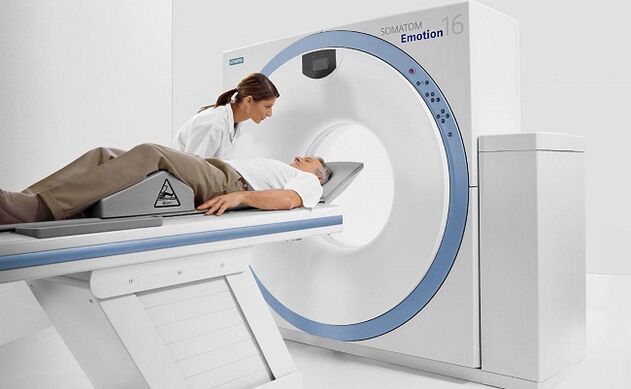
The neurologist also conducts certain studies to determine possible disorders of the nervous system.Procedures include electroneuromyography and observation of tendon reflexes.Cardiographic observations are carried out in order to trace the degree of influence of the disease on the functioning of the heart.Such studies can predetermine the occurrence of ischemic pathology and it will be possible to control blood pressure.
Treatment
After the diagnosis, the doctor may prescribe the following medications:
- NSAIDs.They are prescribed to eliminate pain.
- It is possible to take corticosteroids, but only in cases of severe pain.If the pain is not intense enough, its elimination is limited to taking non-steroidal drugs.
- Diuretics to relieve swelling.
- B vitamins are used to stimulate blood circulation.
- Chondroprotectors are prescribed for the regeneration of damaged cartilage.
Ointments for the treatment of this form of osteochondrosis are not as effective as they should be and are more suitable for other types of diseases.For those who do not trust or simply do not support pharmacological treatments, there are several other methods that exclude the use of medications.These include acupuncture, electrophoresis, laser, cigar, vacuum, manual therapy, traditional massage and cupping.For such treatment to be effective, it is imperative to contact specially trained and experienced specialists in this area.Correctly selected treatment methods will help stimulate blood circulation, relieve muscle spasms and relieve pain.Correct physical activity is required, including therapeutic exercises and swimming.Good nutrition is a pretty important factor in recovery.
Osteochondrosis in all its forms and of the thoracic region in particular is a very unpleasant pathology.As soon as the first symptoms appear, it is important to promptly contact a specialist so that he can select the appropriate treatment.Delay can lead to worsening of the disease.